Tired of fumbling with tangled cables every time you get into your car? Imagine a seamless driving experience where your phone charges effortlessly, without a single cord in sight. Wireless phone chargers for cars offer just that – a convenient, clutter-free solution to keep your device powered up on the go. This comprehensive guide will navigate you through the world of in-car wireless charging, helping you understand how these devices work, explore the best options available, and make an informed decision to elevate your daily commute.
What is a Wireless Phone Charger for Car and How Does It Work?
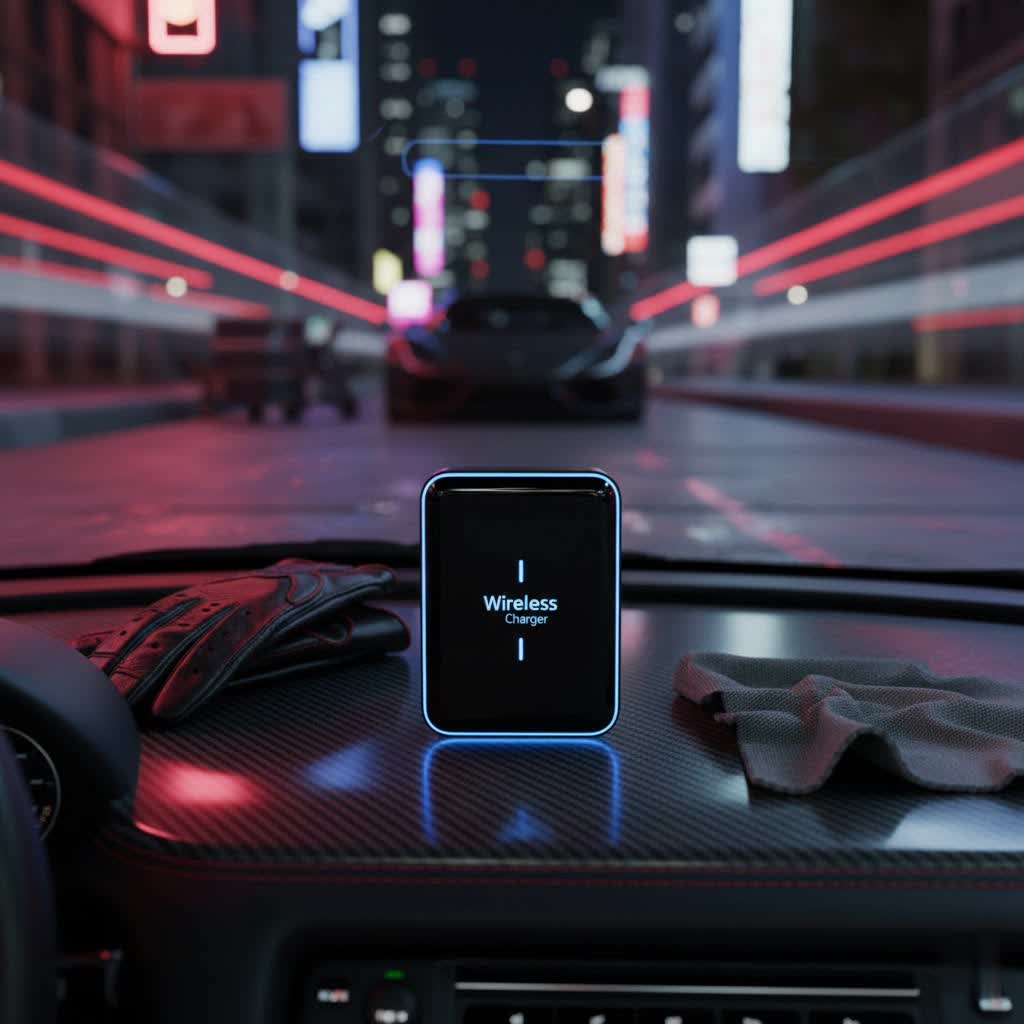
A wireless phone charger for your car is a device designed to power up your smartphone without physical cables, using the principle of inductive charging. This technology involves two coils: a transmitting coil located within the car charger and a receiving coil embedded in your smartphone. When a compatible phone is placed on the charging pad, the charger’s transmitting coil generates an oscillating electromagnetic field. This field then induces an electric current in the phone’s receiving coil, which is subsequently converted into direct current (DC) power to recharge the phone’s battery.
The most prevalent standard for this technology is Qi (pronounced “chee”), developed by the Wireless Power Consortium. Most modern smartphones and in-car charging systems adhere to the Qi standard, ensuring broad compatibility. This ingenious system eliminates the need for clumsy cables, promoting a cleaner car interior and a safer driving environment as you can simply drop your phone into place and go.
Popular Types of Wireless Car Phone Chargers on the Market
The market offers a diverse range of wireless car phone chargers, catering to various preferences and car interiors. Understanding these types is crucial for selecting the best fit for your needs.
Classification by Design and Mounting
- Vent Mount Chargers: These attach to your car’s air conditioning vents, offering easy access and often keeping your phone at eye level for navigation. They are generally compact and easy to install and remove.
- Dashboard Mount Chargers: Utilizing strong adhesive or suction cups, these chargers provide a stable platform on your dashboard, allowing for flexible positioning and clear visibility.
- CD Slot Mount Chargers: For those who no longer use their car’s CD player, this option provides a sturdy mounting point without obstructing vents or windshield views.
- Cupholder Chargers: Some chargers integrate into your car’s cupholder, offering a discreet charging solution, though they might position your phone lower than other mounts.
- Integrated Charging Pads: Newer car models often come with built-in wireless charging pads, typically located in the center console, dashboard tray, or armrest compartment, offering the most seamless integration.
|
Our Picks for the Best Wireless Charger in 2026
As an Amazon Associate I earn from qualifying purchases.
|
||
| Num | Product | Action |
|---|---|---|
| 1 | Apple MagSafe Charger (1 m): Wireless Charger with Fast-Charging Capability |

|
| 2 | Fast Wireless Charger, NANAMI 15W Qi Certified Wireless Charging Stand Compatible iPhone 17/17 Air/16/15/15 Pro/15 Plus/15 Pro Max/14/13/12, for Samsung Galaxy S25/S24/S23/S22/S21 and Qi-Enabled Phone |
|
| 3 | TOZO 2025 W1 New Anti-Slip Wireless Charger 15W Max Fast Wireless Charging Pad Compatible with iPhone 17/16/16 Plus/16 Pro Max /15/14/13/SE Series, Samsung Galaxy S25/S24/S23 Series, Black |
|
| 4 | TRKOY for Magsafe Portable Charger, 5000mAh Wireless Magnetic Power Bank with USB C Charging,Travel Essential for Magsafe Battery Pack Compatible with iPhone 17/16/15/14/13/12 Series, White |
|
| 5 | MagSafe Charger Stand 15W Magnetic Wireless Charger for iPhone 17/Air/16/15/14/13/12 Series (Onyx Black) |
|
| 6 | Yootech Wireless Charger,10W Max Wireless Charging Pad Compatible with iPhone 17/17 Pro/17 Pro Max/Air/16/15/14/13/SE 2022/12/11,Samsung Galaxy S25/S24/S23,for AirPods Pro 3(No AC Adapter) |
|
| 7 | Samsung Galaxy S25 Ultra Wireless Charging Pad for Galaxy S25 S24 S23 S22 S21 S20 Ultra FE Z Fold Flip 7 6,15W Magnetic Wireless Magsafe Charger Station for iPhone 17 16 15 14 Pro Max Plus |
|
| 8 | LỖI |
|
| 9 | INIU Wireless Charger, 15W Fast Qi Certified Wireless Charging Station with Sleep-Friendly Adaptive Light Compatible with iPhone 17 16 15 14 13 12 Pro Max Samsung Galaxy S25 S24 S23 Note 20 Google etc |
|
| 10 | 3 in 1 Charging Station for iPhone, Wireless Charger for iPhone 17 16e 16 15 14 13 12 11 X Pro Max & Apple Watch - Wireless Charging Station for AirPods 4 3 Pro |
|
Classification by Charging Mechanism
- Auto-Clamping Chargers: These chargers feature sensors that automatically open their arms when a phone is detected, then securely clamp down to hold and charge the device. This provides excellent stability and ease of use.
- Magnetic Chargers: Popularized by Apple’s MagSafe technology, these chargers use strong magnets to align and hold compatible phones in place, ensuring optimal coil alignment for efficient charging. Many also work with MagSafe-compatible cases.
Classification by Power Output
Wireless car chargers typically offer various power outputs, directly impacting charging speed:
- 5W: Standard charging speed, suitable for overnight charging or topping up during short drives.
- 7.5W: Optimized for iPhones, providing faster charging than standard 5W.
- 10W & 15W: Common fast-charging speeds for many Android smartphones and some iPhones (with Qi2/MagSafe compatible chargers), significantly reducing charging time on the road.
It’s important to note that achieving these faster speeds often requires a compatible power adapter, such as a Quick Charge 3.0 (QC 3.0) car charger, which may need to be purchased separately.
Top Wireless Phone Chargers for Cars: A Comparative Guide
Choosing the “best” wireless car charger depends heavily on individual needs, but several models consistently receive high marks for performance, design, and features. Here’s a brief overview of some highly-rated options and what they offer:
| Product Name | Type/Mounting | Max Power Output | Key Features | Pros | Cons |
|---|---|---|---|---|---|
| ESR Qi2 Magnetic Wireless Car Charger (Halolock) | Magnetic (MagSafe) | 15W (Qi2) | Strong magnets, Qi2 certified, compact. | Excellent for iPhones (MagSafe), stable, fast charging. | Requires MagSafe-compatible phone/case, power adapter often separate. |
| iOttie Auto Sense Wireless Car Charger | Auto-clamping, Vent/Dash | 15W | Auto-clamping arms, active cooling, adjustable. | Secure grip for various phone sizes, active cooling, Apple certified. | Can be bulkier than magnetic mounts, higher price point. |
| Anker MagGo Wireless Charging Station 3-in-1 | Magnetic (MagSafe), Stand | 15W | 3-in-1 (phone, watch, earbuds), foldable. | Versatile for Apple ecosystems, fast charging, travel-friendly. | Primarily for Apple users, may not fit all car setups due to its stand design. |
| ZEEHOO Wireless Car Charger | Clamp style | 15W | Budget-friendly, good grip. | Affordable, works with many phones, decent performance. | Might lack advanced features of premium models. |
| CHGeek Wireless Car Charger Phone Holder Mount | Auto-clamping, Vent/Dash | 15W | Wide compatibility, 360° rotation, FOD. | Versatile, strong hold, foreign object detection, adjustable. | Requires QC 3.0 adapter (not included). |
> “The evolution of in-car wireless charging, particularly with standards like Qi2 and MagSafe, is transforming how we interact with our devices while driving, prioritizing both convenience and safety.” – Dr. Elena Petrova, Automotive Technology Expert
How to Choose the Right Wireless Phone Charger for Your Car
Selecting the ideal wireless car charger involves considering several factors that align with your specific vehicle, smartphone, and driving habits.
Assess Your Car’s Interior and Your Phone’s Needs
Start by evaluating your car’s layout.
- Mounting Location: Where can a charger be safely and conveniently placed without obstructing your view or controls? Consider your car’s vent design, dashboard space, or if a cupholder solution is more practical.
- Phone Compatibility: Does your phone support wireless charging? Most modern smartphones do, especially those from Apple, Samsung, and Google, typically adhering to the Qi standard.
- Case Compatibility: If you use a phone case, ensure the charger can accommodate its thickness. Many chargers are “case-friendly” and can charge through cases up to 5mm thick.
- Usage Scenario: Do you primarily need a charger for short commutes or long road trips? Do you rely on your phone for GPS navigation, requiring a clear view?
Power Output and Charging Speed
Matching the charger’s power output to your phone’s maximum supported wireless charging speed is critical for efficient power delivery.
- iPhone users: Look for chargers that support 7.5W or 15W (for MagSafe/Qi2 compatible models) to maximize charging speed.
- Android users: Many Android phones can utilize 10W or 15W wireless charging. Check your phone’s specifications to ensure you pick a charger that can deliver its optimal speed.
- Power Adapter: Remember that the car charger itself needs a robust power source. A QC 3.0 car adapter is often necessary to unlock faster charging speeds, even if the wireless charger itself is capable of 15W.
Mounting Options and Stability
The stability of your charger is paramount for safe driving.
- Vent Mounts: Ensure your car’s vents are sturdy enough to support the charger and phone, and that the mount won’t block airflow excessively.
- Dashboard Mounts: Look for strong suction cups or adhesive bases that can withstand temperature fluctuations and vibrations. A telescoping arm can offer greater adjustability.
- Magnetic Mounts: Check the strength of the magnets, especially if you have a heavier phone or drive on bumpy roads. MagSafe-compatible chargers generally offer superior magnetic hold for iPhones.
- Auto-clamping mounts provide a secure, consistent grip for various phone sizes, preventing drops even on rough terrain.
Safety Features and Brand Reputation
Prioritize chargers with built-in safety mechanisms to protect your device and vehicle.
- Overheat Protection: Prevents the charger and your phone from getting dangerously hot during extended use.
- Foreign Object Detection (FOD): Detects metal objects placed on the charging pad and stops charging to prevent overheating or damage.
- Short-Circuit Protection: Guards against electrical malfunctions.
- Brand Reputation: Stick to reputable brands like Anker, Belkin, iOttie, and ESR, which are known for quality, reliability, and good customer support. Reading user reviews can provide valuable insights into real-world performance and durability.
Tips for Safe and Effective Use of Your Wireless Car Charger
To ensure your wireless car charger performs optimally and safely, follow these practical tips:
- Optimal Placement: Position your charger in a spot that allows for easy phone placement and removal, does not obstruct your view of the road, and avoids blocking airbags or critical controls.
- Use a Compatible Power Adapter: Always pair your wireless charger with a high-quality, compatible car power adapter (e.g., QC 3.0 or PD-enabled USB-C car charger) to achieve the promised charging speeds and maintain stability. An underpowered adapter can lead to slow charging or no charge at all.
- Remove Foreign Objects: Before placing your phone on the charger, ensure there are no metal objects (like keys, coins, or credit cards with magnetic strips) between your phone and the charging pad. Foreign object detection helps, but prevention is key to avoiding heat buildup and potential damage.
- Check Phone Alignment: For efficient charging, your phone’s receiving coil must align with the charger’s transmitting coil. Most chargers have indicators (like an LED light) to confirm charging has begun. Magnetic and auto-clamping chargers often help with this alignment.
- Avoid Overheating: While chargers have protection, direct sunlight can cause both your phone and charger to overheat, potentially slowing down or stopping the charging process. If possible, park in the shade or use a charger with active cooling.
- Keep it Clean: Periodically wipe down your charger’s surface to remove dust and debris, which can interfere with charging efficiency.
Conclusion
Wireless phone chargers for cars are no longer a luxury but a smart upgrade for any driver seeking convenience, safety, and a tidy cabin. By understanding the underlying technology, exploring the diverse range of products, and considering key factors like mounting, power output, and safety features, you can confidently choose a charger that seamlessly integrates into your driving lifestyle. Ditch the cables, embrace the future, and enjoy a smarter, more connected journey. What features will you prioritize for your ultimate in-car charging experience?
Frequently Asked Questions
Do wireless car chargers charge as fast as wired chargers?
While modern wireless car chargers, especially 10W or 15W models with a QC 3.0 adapter, offer fast charging speeds, they generally won’t match the absolute fastest wired charging speeds that some phones can achieve (e.g., 50W+ proprietary wired solutions). However, they provide ample speed for keeping your phone topped up on the go.
Will a wireless car charger work with any phone?
No, a wireless car charger will only work with smartphones that support wireless charging, typically adhering to the Qi standard. Most flagship phones from the last few years (iPhone 8 and newer, many Samsung Galaxy S and Note series, Google Pixel series) are Qi-enabled. Always check your phone’s specifications before purchasing.
Are wireless car chargers safe for my phone’s battery?
Yes, reputable wireless car chargers are designed with safety features like overheat protection, foreign object detection, and overcharge protection to safeguard your phone’s battery. Using certified chargers from trusted brands helps ensure your device is charged safely without damaging the battery.
Can I use a wireless car charger with a phone case?
Most wireless car chargers are “case-friendly” and can charge through non-metallic cases up to 3-5mm thick. However, very thick cases, cases with metal plates, or those with bulky accessories (like pop sockets) may interfere with charging efficiency or prevent it entirely. Magnetic (MagSafe) chargers work best with MagSafe-compatible cases.
How do I install a wireless car charger?
Installation varies by type. Vent mounts simply clip onto an air vent. Dashboard mounts use suction cups or adhesive pads. Ensure the surface is clean before attaching. Most chargers then plug into your car’s 12V cigarette lighter socket or a USB port using a compatible power adapter. Always refer to the product manual for specific instructions.
What is Qi2 and how does it affect car chargers?
Qi2 is the latest version of the Qi wireless charging standard, featuring Magnetic Power Profile (MPP). It is inspired by Apple’s MagSafe and offers improved charging efficiency, faster speeds (up to 15W for compatible devices), and better alignment due to its magnetic locking feature. Qi2 car chargers provide a more secure and efficient charging experience, especially for newer iPhones and future Android devices.
